When you need heat, you can simultaneously generate electricity—all while reducing costs and pollution. What enables enormous financial and energy savings in commerce and industry is no longer uncommon for homeowners. Using the principle of combined heat and power (CHP), Viessmann makes this profitable and resource-efficient form of energy production accessible to the homeowner. Find out which products make this possible and what you need to get started
Highest energy efficiency thanks to coordinated systems
Viessmann thinks in terms of systems and offers a complete range of heating and power generation solutions from a single source. The following Viessmann energy and heating systems can be combined in various ways:
energy generating systems with each other, such as a Vitovalor fuel cell heating system with a photovoltaic system
hybrid heat generators with power generation systems such as photovoltaic systems
Energy storage as an addition to any of the above devices
ViCare: Energy Management for Heat and Power
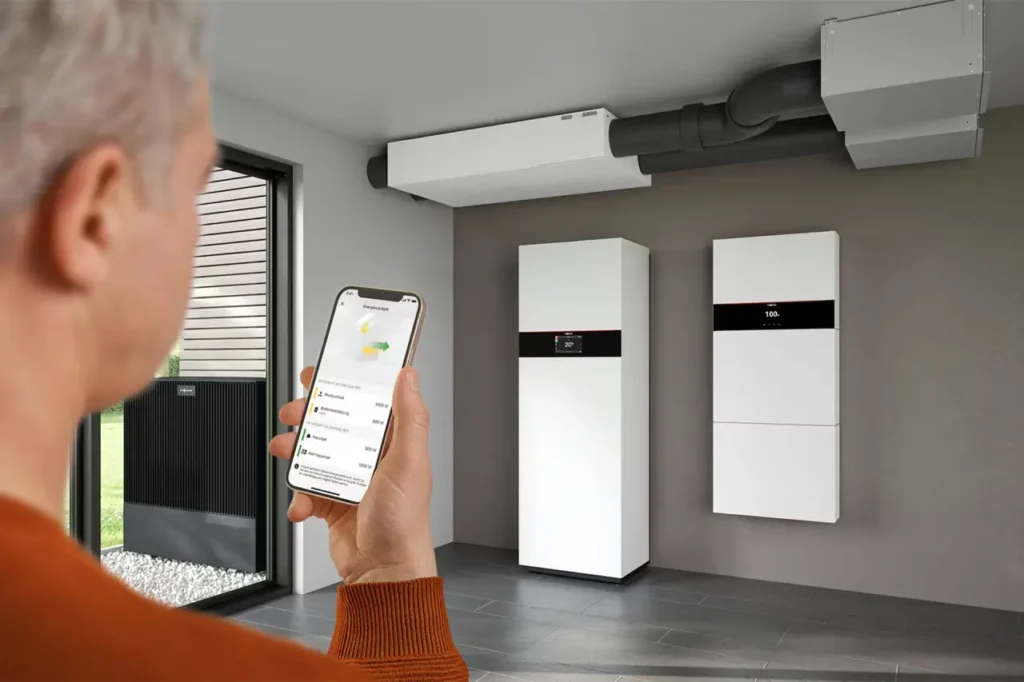
Overcoming complexity: With energy management via the ViCare app, you get an overview of all components and energy flows of your heat and power generation system.
A fuel cell micro-CHP is the driving force in your home
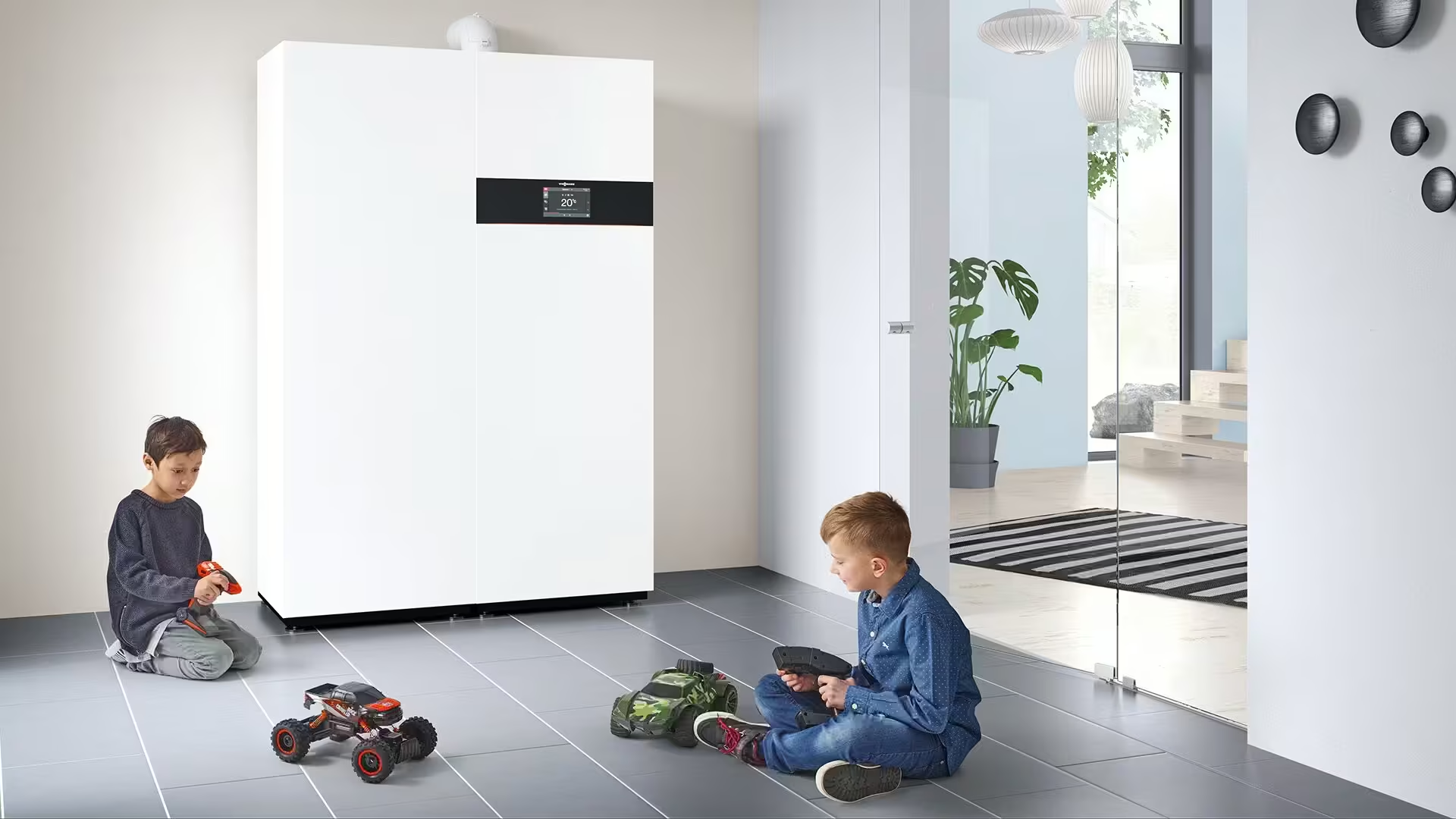
Vitovalor PT2 fuel cell heating system
Cogeneration is the principle behind the production of heat and electricity. It utilizes the mechanical energy of the engine and the released thermal energy (heat) equally. This principle is put into practice in the form of a micro-CHP system in the Vitovalor fuel cell heating system from Viessmann. Formerly known as the Vitovalor 300-P, the product line now consists of the Vitovalor PA2, an add-on device for existing heating systems, and the Vitovalor PT2, a fully integrated solution. Both versions were developed in collaboration with Panasonic and represent the latest generation of fuel cells available for use in detached and semi-detached homes.
Here are the benefits of the Vitovalor fuel cell heating system:
Reliable supply of heating water and hot water
Effective thermal insulation for high energy efficiency
Variety of sizes and designs
Possibility of combination with any heating systems
Can be expanded to create a cylinder loading system
Photovoltaic installations and energy storage systems
Vitocharge VX3 Energy Storage System
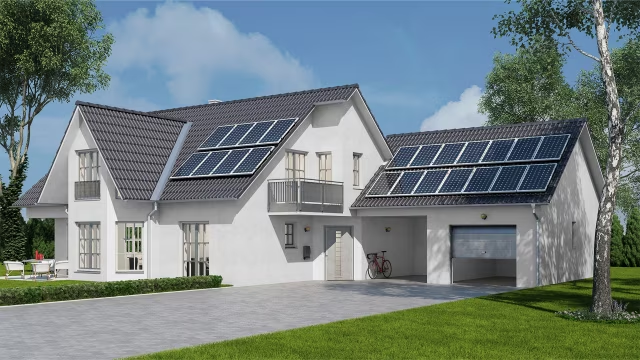
The Vitovalor thermal system produces electricity only when heat is simultaneously needed. Since this occurs less frequently during the summer months, the Vitovalor's electricity production decreases during these periods. Therefore, the system can be supplemented with a photovoltaic system (PVS) to ensure the home has sufficient electricity even on hot days. If the Vitovalor, in combination with the PV system, produces more energy than needed, the excess can be exported to the grid or stored in a battery.
Advantages of Vitovalor with photovoltaic system and energy storage:
Here are the benefits of combining a photovoltaic system and energy storage:
Autonomous power supply increases independence from local electricity suppliers
Reduced energy costs as self-generated energy is cheaper than electricity providers
The use of energy storage significantly increases self-consumption
Positive impact on climate protection as transport routes are eliminated
Heat recovery systems suitable for residential buildings
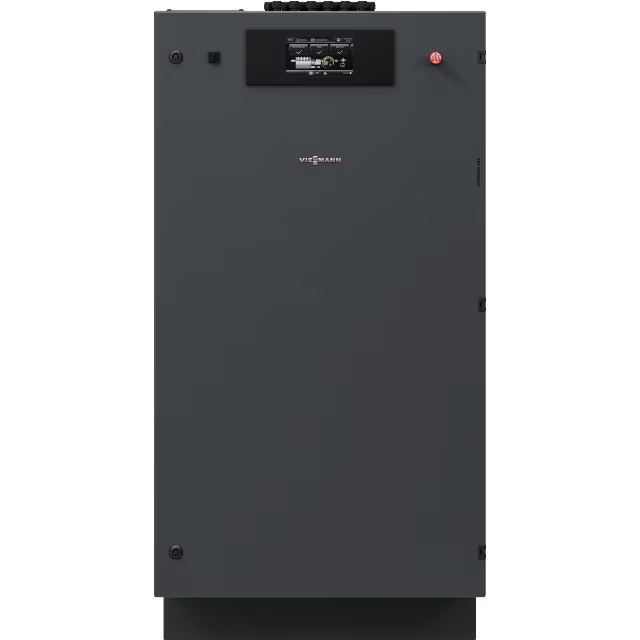
Vitobloc 300
Type NG 15/NG 20
Electrical power: 15 or 20 kW
Heating power: 38.3 or 46.5 kW
Smooth-running 4-cylinder engines
H₂ readiness 20%
Vitobloc 200
Type EM-50/81
Electric power: 50 kW
Heating power: 83 kW
Smooth running 4-cylinder 4-stroke gas engine
Economical production of electricity and heat
Vitobloc 200
Type EM-20/39
Electric power: 20 kW
Heating power: 39 kW
Smooth running 4-cylinder 4-stroke gas engine
Economical production of electricity and heat
Vitobloc 200
Type EM-9/20
Electrical power: 8.5 kW
Thermal power: 20.1 kW
Smooth-running 3-cylinder gas engine
Economical production of electricity and heat
Vitobloc 200
Type EM-6/15
Electrical power: 6.0 kW
Heating power: 14.9 kW
Smooth-running 3-cylinder gas engine
Economical production of electricity and heat
Gas piston cogeneration units for large residential buildings
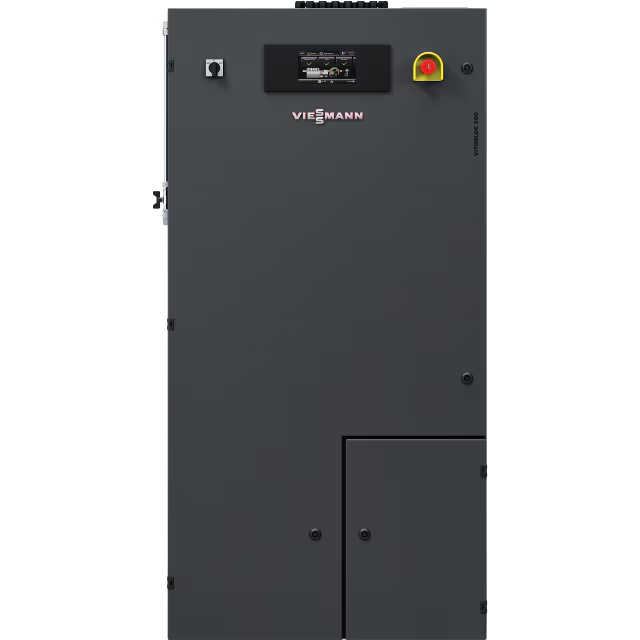
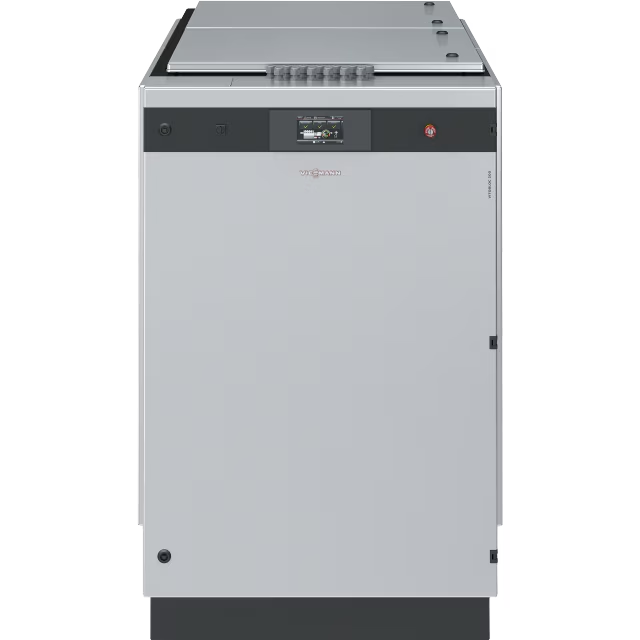
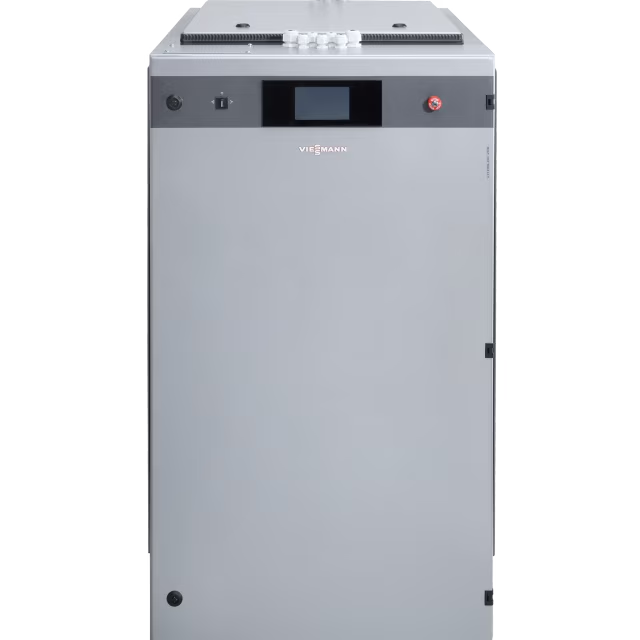
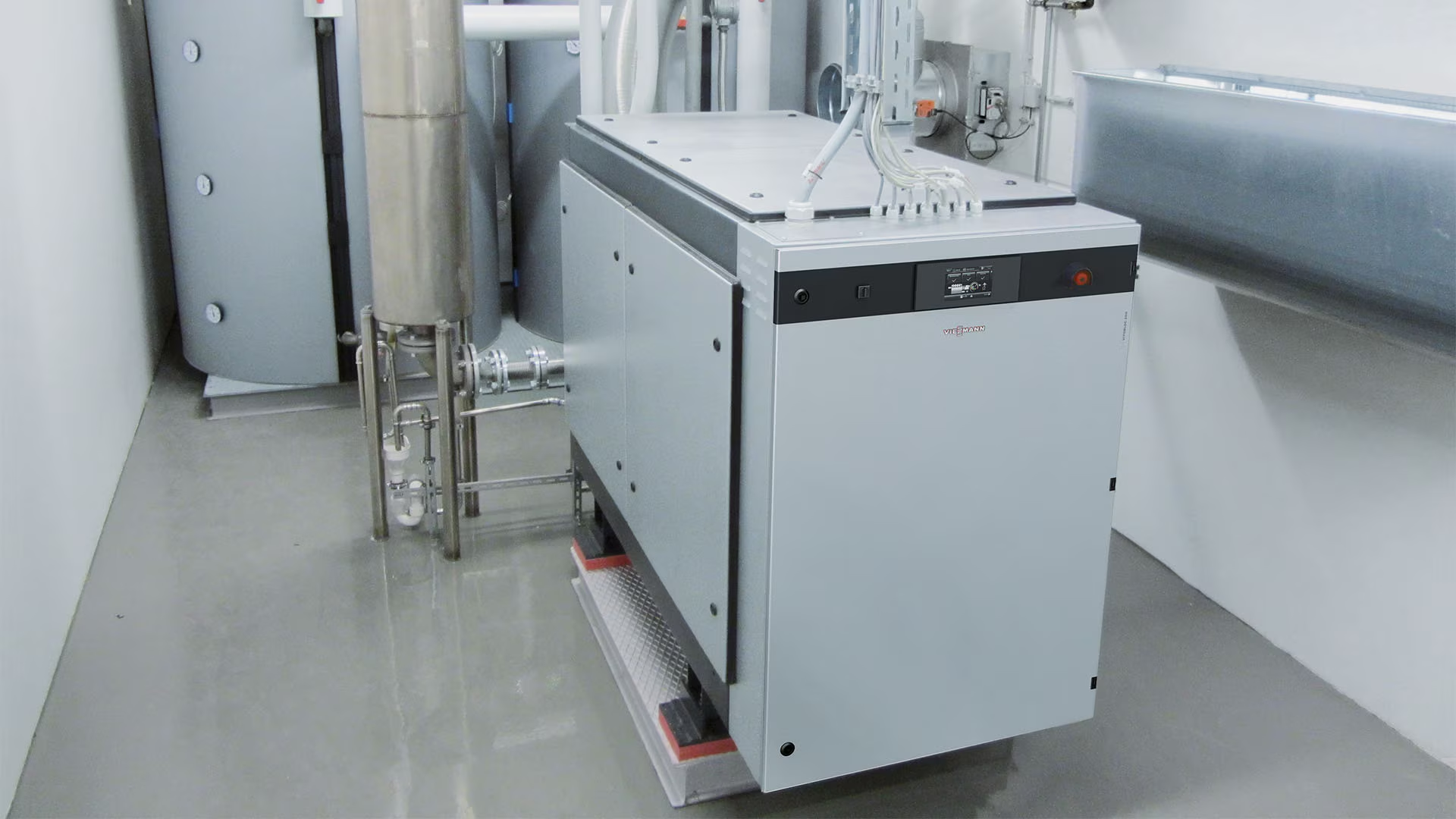
Cogeneration unit Vitobloc 200 EM-20/39
Like a fuel cell, a combined heat and power plant (CHP) operates on the principle of cogeneration. It is equipped with a gas combustion engine that drives a generator to generate electricity. Designed for high efficiency, this heating system is ideal for large residential buildings and housing complexes. As a "team player" between the electricity and heat generation systems, it shares the production of heat and hot water with a boiler.
The Viessmann Vitobloc cogeneration unit can be precisely tailored to the needs of residential buildings and integrated into individual systems. This opens up all possibilities: from integration into the overall system technology to connection to a refrigeration unit.
The advantages of a cogeneration plant for residential buildings at a glance:
What are the benefits of a combined heat and power plant for residential buildings? Here's a quick overview:
Heat enters the heating network with virtually no losses
You generate electricity according to your own needs
Electricity can be exported to the public grid
At a glance: Viessmann's product range for heat and power engineering
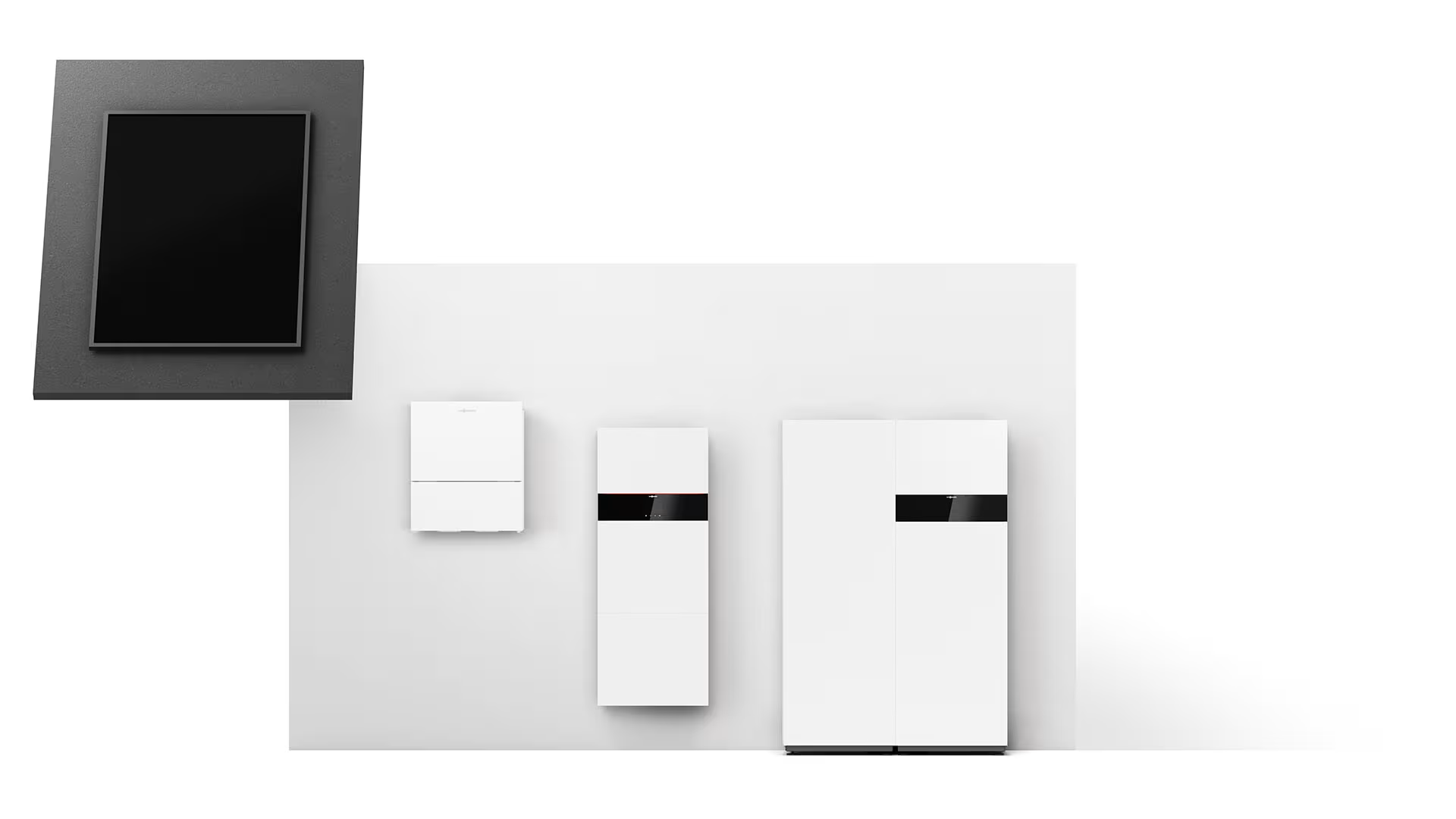
Vitovolt 300 photovoltaic system, Vitovent 300-W mechanical ventilation unit, Vitocharge VX3 energy storage unit and Vitovalor PT2 fuel cell heating system
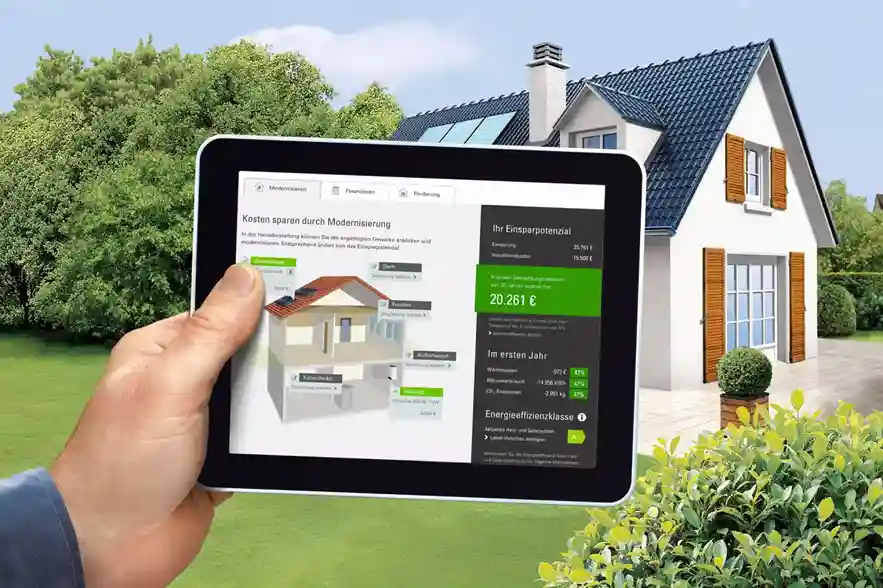
Choosing the right heating system from the available options isn't always easy. It's a good idea to seek help from an experienced installer, as they're well-versed in your individual requirements. Before scheduling a consultation, we recommend reviewing the Viessmann product range. For this purpose, we recommend the Viessmann product catalog . Extensive filtering options, such as by application area, make your search simple and productive. You'll also receive specific and detailed product suggestions when searching through the Viessmann product finder .
Expert consultation
Get a free, personalized consultation on heating and electricity supply for residential buildings from our qualified consultants!
Digitalization and the energy transition also present challenges for Viessmann. But at the same time, they represent the greatest opportunities in our company's history, which spans over 100 years. One thing is certain: together with our partners, we are making the most of them.
Heating, cooling, ventilation, and power generation in new buildings – which solutions and systems are suitable, and what do you need to know? Read more here.