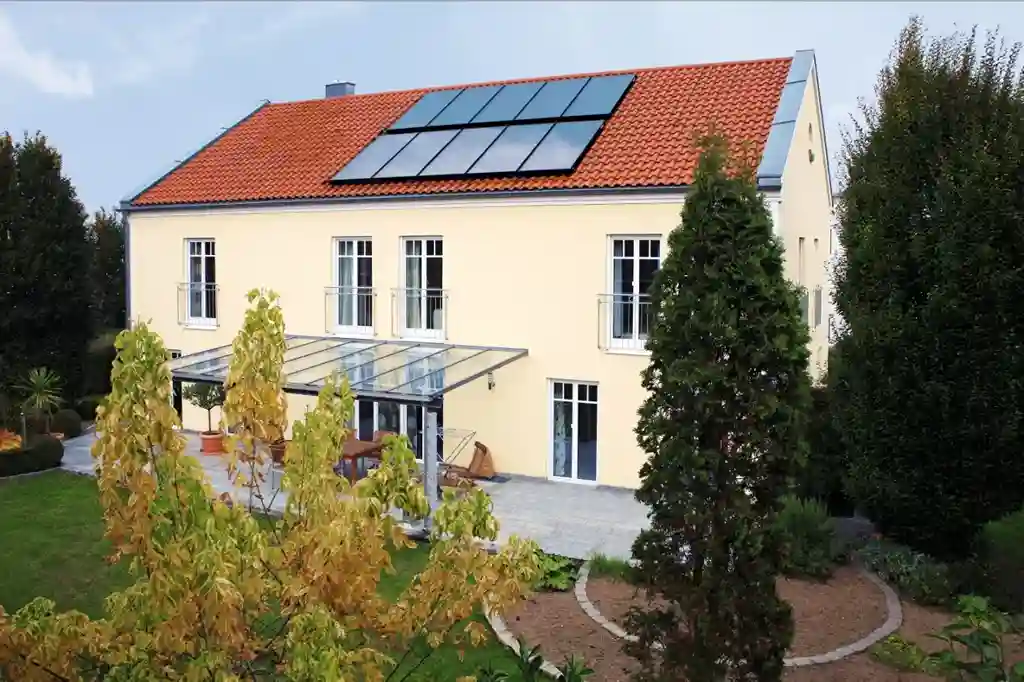
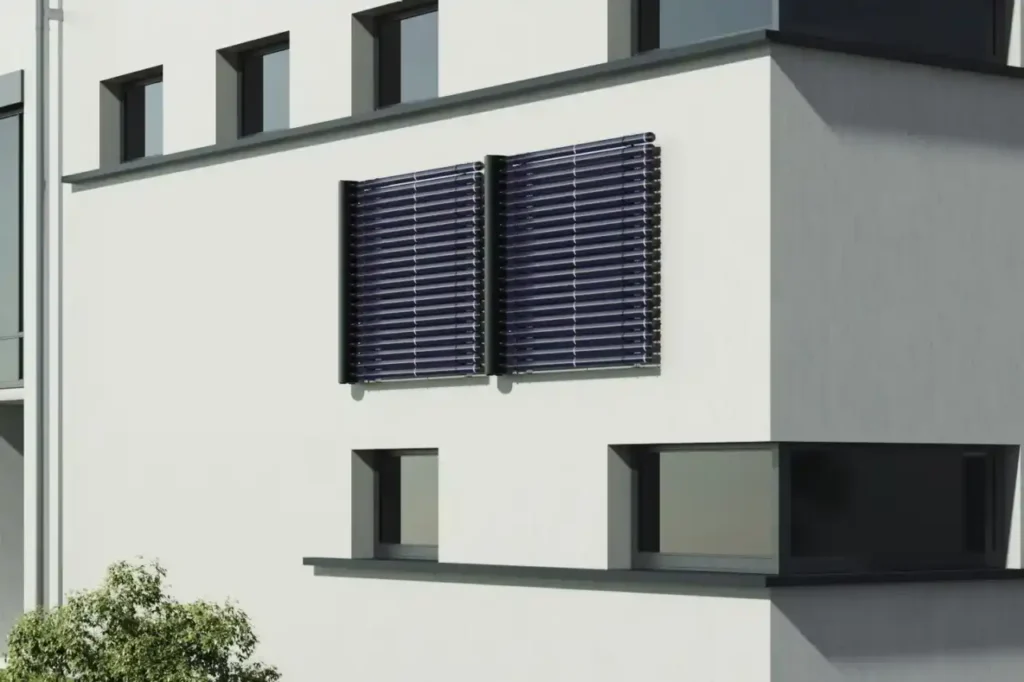
The use of solar energy is what the collectors from the Viessmann Vitosol range allow. They are used either only to heat the DHW or additionally to support existing boilers with central heating. In this way, you can use up to 60 percent less energy to heat the DHW or reduce the total heat requirement by up to 35 percent if the DHW and heating are heated together.
When installing a new heating system as part of a new construction or retrofit project, Vitosol solar collectors must always be considered during the planning phase. These investments do not only pay off in terms of energy savings. They are also supported by government subsidies. Moreover, this is a big plus for the environment. This is because the collectors convert solar energy into thermal energy without carbon dioxide emissions. CO₂ Neutral heating is the motto.
Vitosol flat and tubular collectors
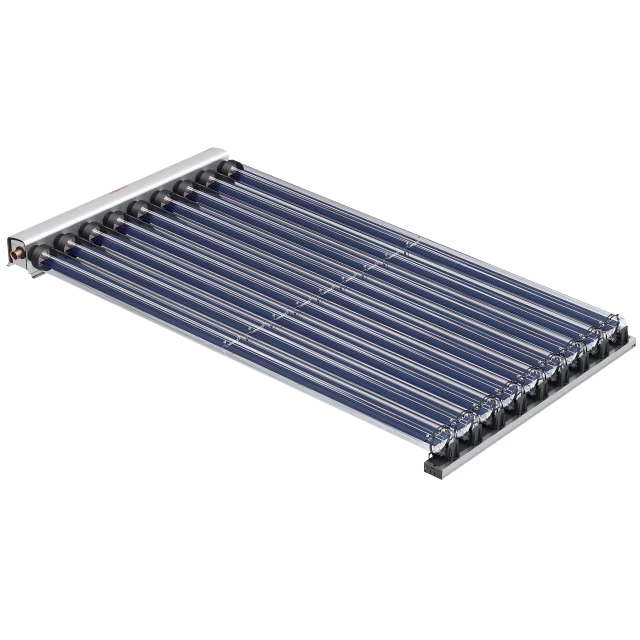
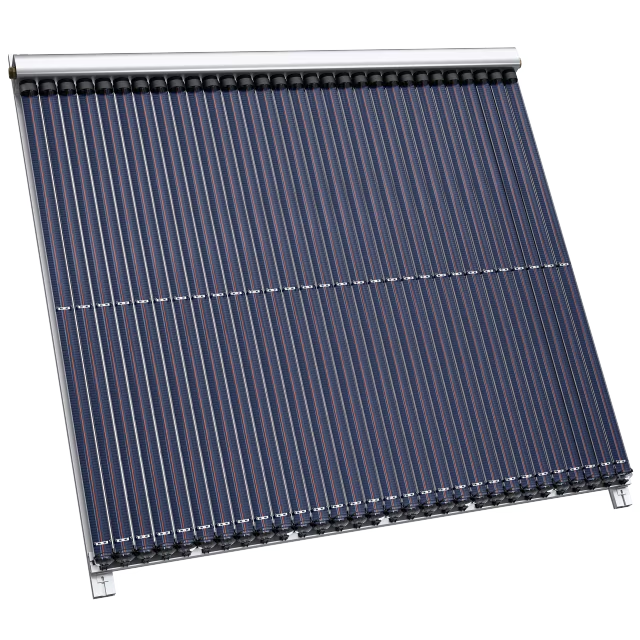
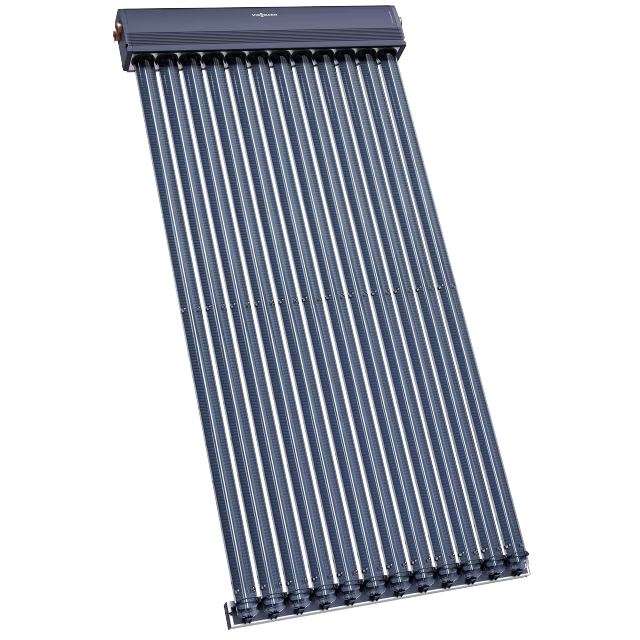
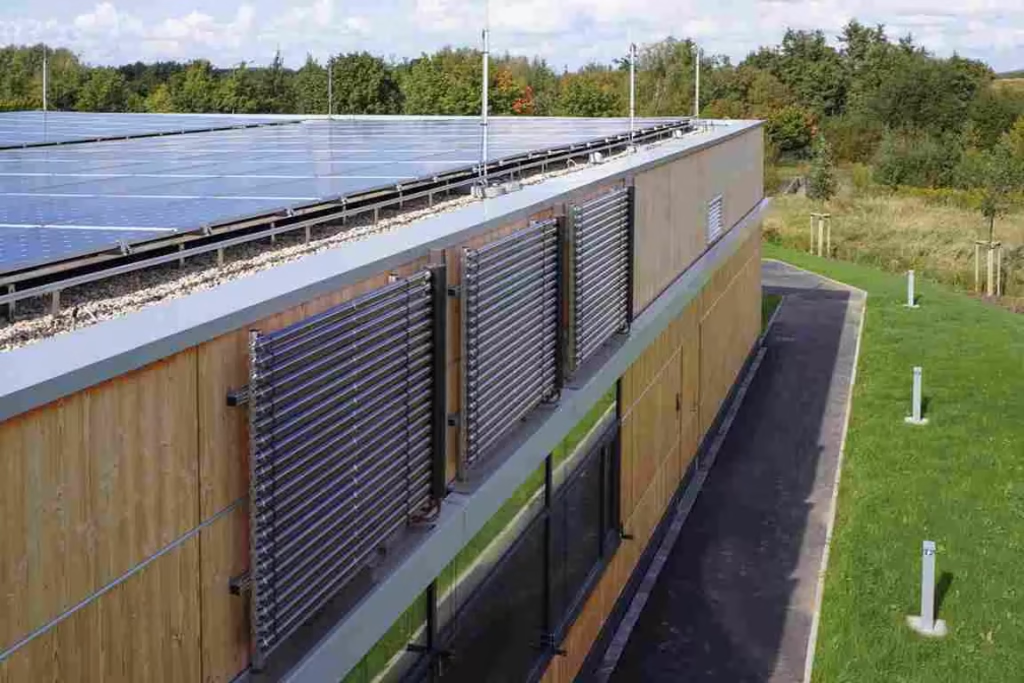
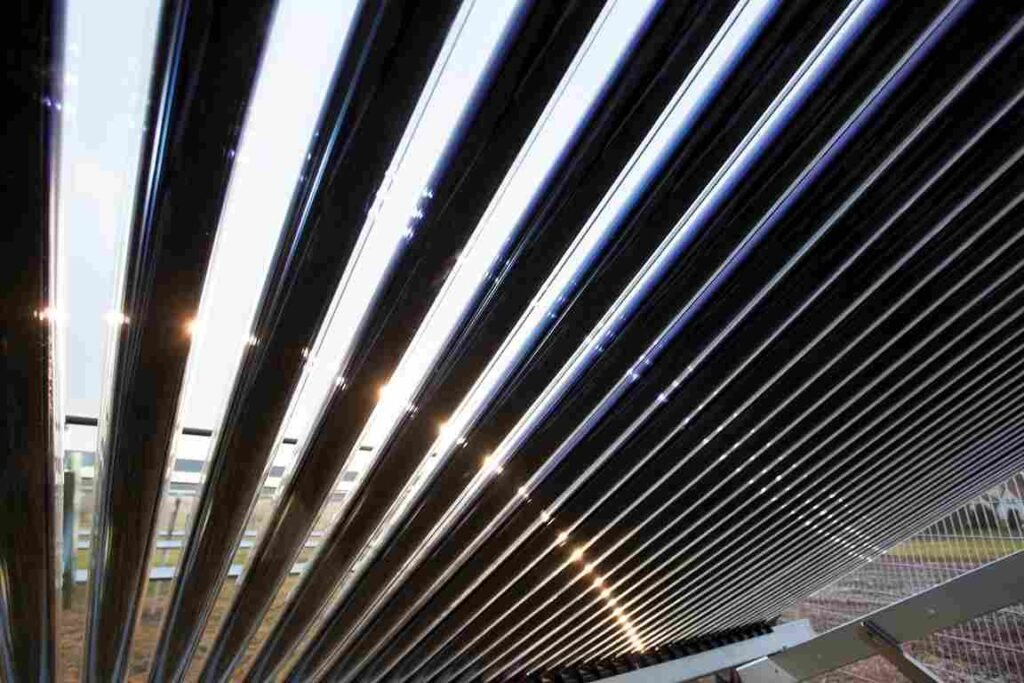
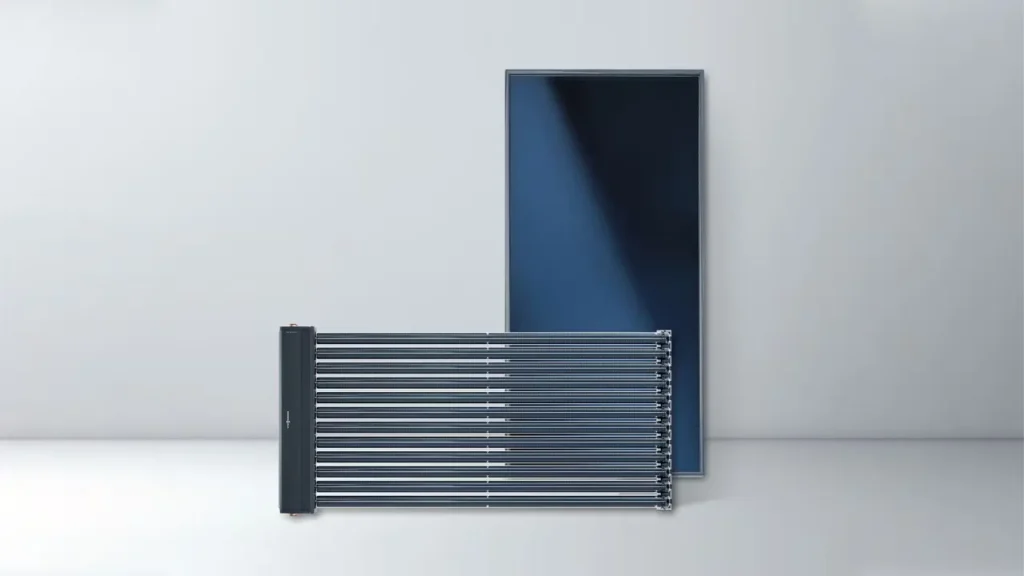
There are two types of solar collectors - flat and tubular. Both of them convert solar energy into heat energy using an absorber. However, they differ in the principle of operation of the parts. Tubular collectors, for example, are made up of tubes, from which they get their name. The absorber is located inside a tube surrounded by a heat-insulating vacuum. The heat transfer fluid does not pass directly through the tubes. This is because Viessmann tubular manifolds work on the principle of a heat pipe. The heat transfer fluid passes through a heat exchanger, which is also called a collector. The working medium evaporates inside the heat pipe and transfers heat to the heat transfer fluid through the Duotec twin-tube heat exchanger. This guarantees optimal heat transfer. Absorbers in a flat plate collector, on the other hand, are copper or aluminum sheets that absorb the sun's rays. Pipes connected to these absorbers direct the liquid through the manifold.
Basic properties
Vitosol Tubular collectors
Viessmann Vitosol Tubular collectors contains highly selective absorbers, thanks to which a high level of efficiency is achieved. This is facilitated by the fact that the absorbers are located inside the tubes. This protects them from weathering and pollution, which in turn ensures a consistently high energy utilization. In addition, heat loss is low due to the particularly efficient thermal insulation of the vacuum.
Viessmann Vitosol products are quick and easy to install. They come in pre-assembled modules. The tubes can be rotated, which makes it much easier to replace individual tubes. The connection is made using corrugated stainless steel push connectors.
In the Viessmann product range you will find the following models:
Vitosol 300-TM
Vitosol 200-TM
Vitosol 200-T type SPX
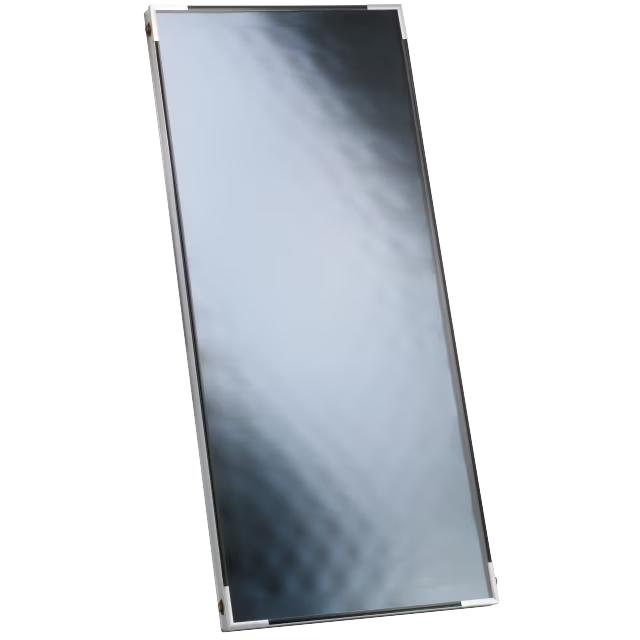
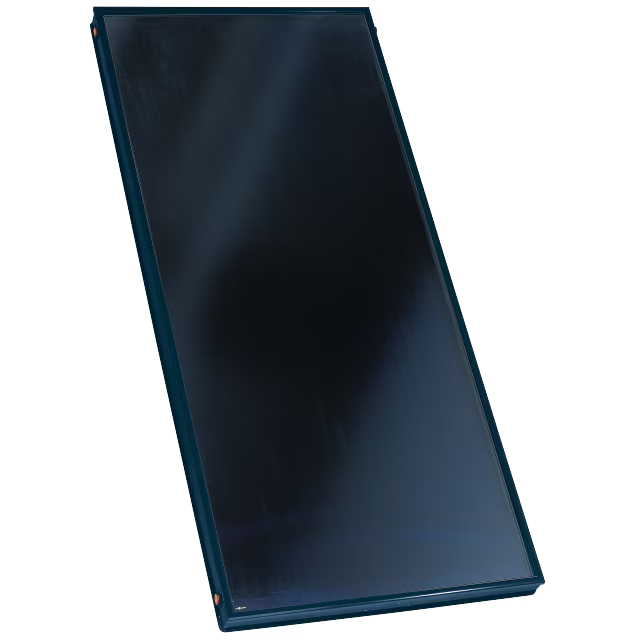
Vitosol Flat-plate Collectors
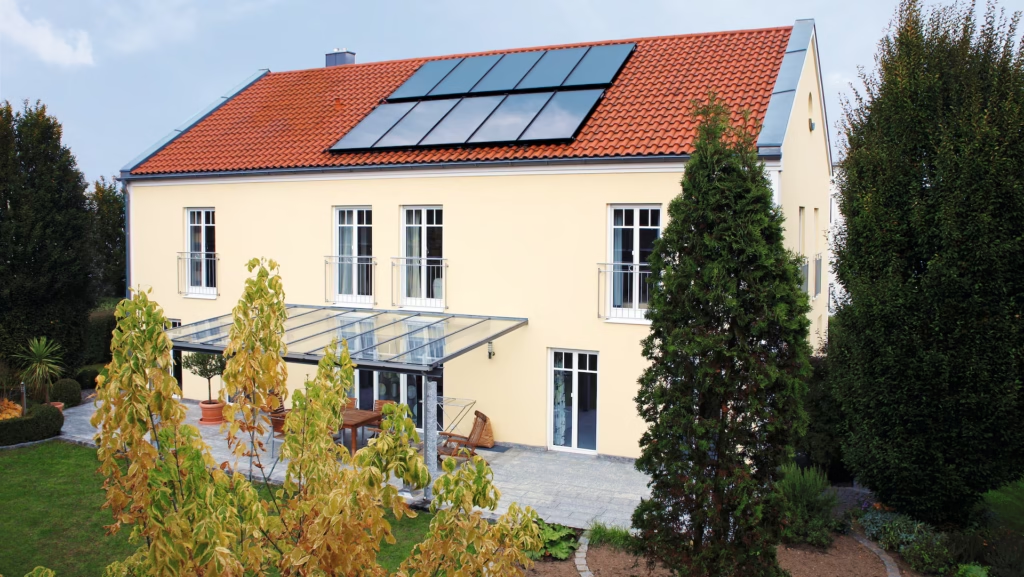
The basis of the Vitosol series flat-plate collectors is a meander-shaped absorber located under a durable and highly transparent protective panel made of special glass. High-quality materials guarantee constant tightness and high system stability. With Vitosol 200-FM and Vitosol 100-FM, up to twelve solar collectors can be quickly and easily connected together. This is possible with above-roof installation, roof integration, or installation on collector supports.
In the Viessmann product range you will find the following models:
Vitosol 200-FM
Vitosol 100-FM
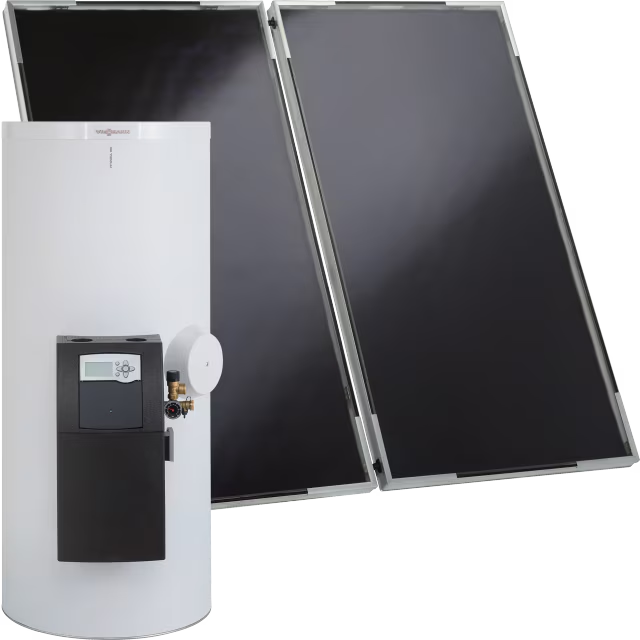
Collectors are only one part of the solar thermal system. In addition to piping, heat exchangers and pumps, DHW cylinders are the key to the efficient backup use of solar energy to provide heating and hot water. With the help of a cylinder, energy that is not currently required can be temporarily stored for later use. Viessmann offers a special product package for this purpose: Vitosol 141-FM - consisting of two Vitosol 100-FM flat collectors and a 250-liter Vitocell cylinder.
Viessmann Vitosol product feature: ThermProtect
In order to ensure high operational reliability and a long service life, Viessmann has developed ThermProtect, an automatic overheating protection system. This means that the manifolds shut down when a certain temperature limit is reached. This happens regardless of the system configuration, control settings and location of the collectors. Due to different technical requirements, overheat protection works differently for flat and tubular collectors.
For example, the crystal coating of the absorber Vitosol 200-FM and 100-FM changes as soon as the limit temperature is exceeded. When the temperature drops again, the crystal structure returns to its original state. This process is reversible and permanently available.
In tubular manifolds, on the other hand, the heat pipe principle provides a temperature-dependent shutdown. Solar energy evaporates the heat transfer fluid in the heat pipe, which is liquefied again in the condenser. The resulting heat energy is transferred to the system. ThermProtect here means that the medium can no longer condense at a temperature of 120 degrees Celsius.
Vitosol product range
Tubular collectors
Vitosol 200-TM
Vacuum Tube collector
The working principle of a heat pipe
ThermProtect
Long service life
Overheat Protection
Vitosol 200-T SPX
Vacuum Tube collector
Heat Pipe Technology
Antifreeze or water
Pre-assembled modules
Cost-effective and reliable operation
Vitosol 300-TM
Vacuum Tube collector
The working principle of a heat pipe
Efficient Heat Transfer
Quick and easy installation
Exceptionally long service life
Flat plate collectors
Vitosol 100-FM
Flat plate collector
ThermProtect absorbent layer
High level of solar coverage
Universal installation
Fast and reliable connection
Vitosol 141-FM
DHW Solar Package
Low energy costs
Easy connection
ThermProtect absorbent layer
Anti-corrosion cylinder
Vitosol 200-FM
Flat plate manifold
ThermProtect absorbent layer
Attractive design
Universal installation
High level of solar coverage
Related topics
Solar Energy Use with Solar System
The solar system provides energy independence. It reduces energy costs and protects the environment. We will explain the difference between photovoltaics and solar thermal energy and how these two systems work.
Solar fluid prevents solar thermal systems from freezing at low temperatures in winter. We discuss properties, content and control, as well as maintenance recommendations.
Solar collectors are the basis of solar thermal energy
Viessmann solar collectors allow you to convert solar energy into usable heat for domestic hot water or backup central heating. Find out how this process works here
With solar thermal systems, you can use the free energy of the sun in your own home. This reduces heating costs and protects the environment. We provide information about the design and functioning of solar thermal systems.