
Photo: © visivastudio | Shutterstock.com
Photo: © visivastudio | Shutterstock.com
When it comes to digitalization, one term keeps popping up: smart home. This term has no clear definition. By "smart home," most people mean a "smart home" in which objects interact with each other and can be controlled using internet-enabled mobile devices, such as smartphones, tablets, and voice assistants. However, that's not all. A smart home also allows for optimal energy metering and monitoring. This can help you identify potential savings. But how does a "smart home" actually work, and how can heating systems be integrated into it? Topics at a glance
The smart home operates on the principle of input, processing, and output. How this works in practice is best explained using the Viessmann ViCare app as an example.
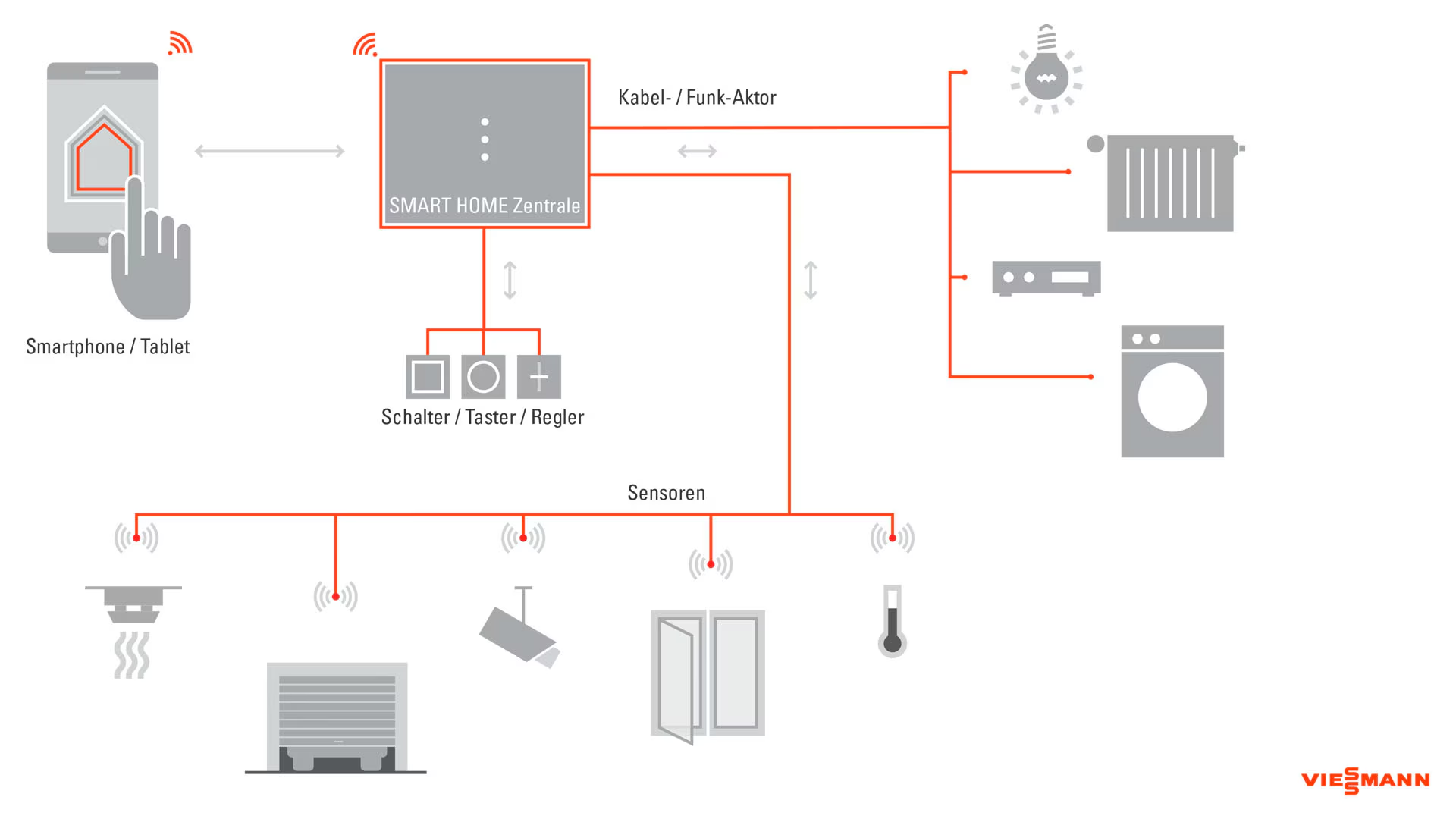
Login : Launch the app using a smartphone or tablet. The user interface opens and displays numerous functions, including the desired temperature setting. By tapping the appropriate interface, the user can issue a command.
Processing : Every smart home has a smart home control center. In the case of the ViCare app, this is also called an internet interface. A command sent via WiFi (to reach the desired temperature) is received and processed by this control center. In addition to WiFi, smart home devices also use other data transmission standards, such as Bluetooth, Z-Wave, and KNX, the latter of which is a wired solution.
Output : After processing, the command is executed using an output device. In our example, this is the heating system, which will supply heating water to the radiators until the set temperature is reached. Depending on the output device, the application user will be informed of the progress and result of the command.
Beyond the example above, there are other practical applications for smart home devices, such as light bulbs, music systems, and entry doors. Other examples include robotic vacuum cleaners, smart washing machines, surveillance cameras, and even coffee makers. Homeowners pursue several goals during operation, but among the most important are energy savings, increased convenience, and security
There are many ways to save energy. One of them is using smart, efficient heating technology. The savings potential here is significant, as a significant portion of a household's energy consumption is spent on heat generation.
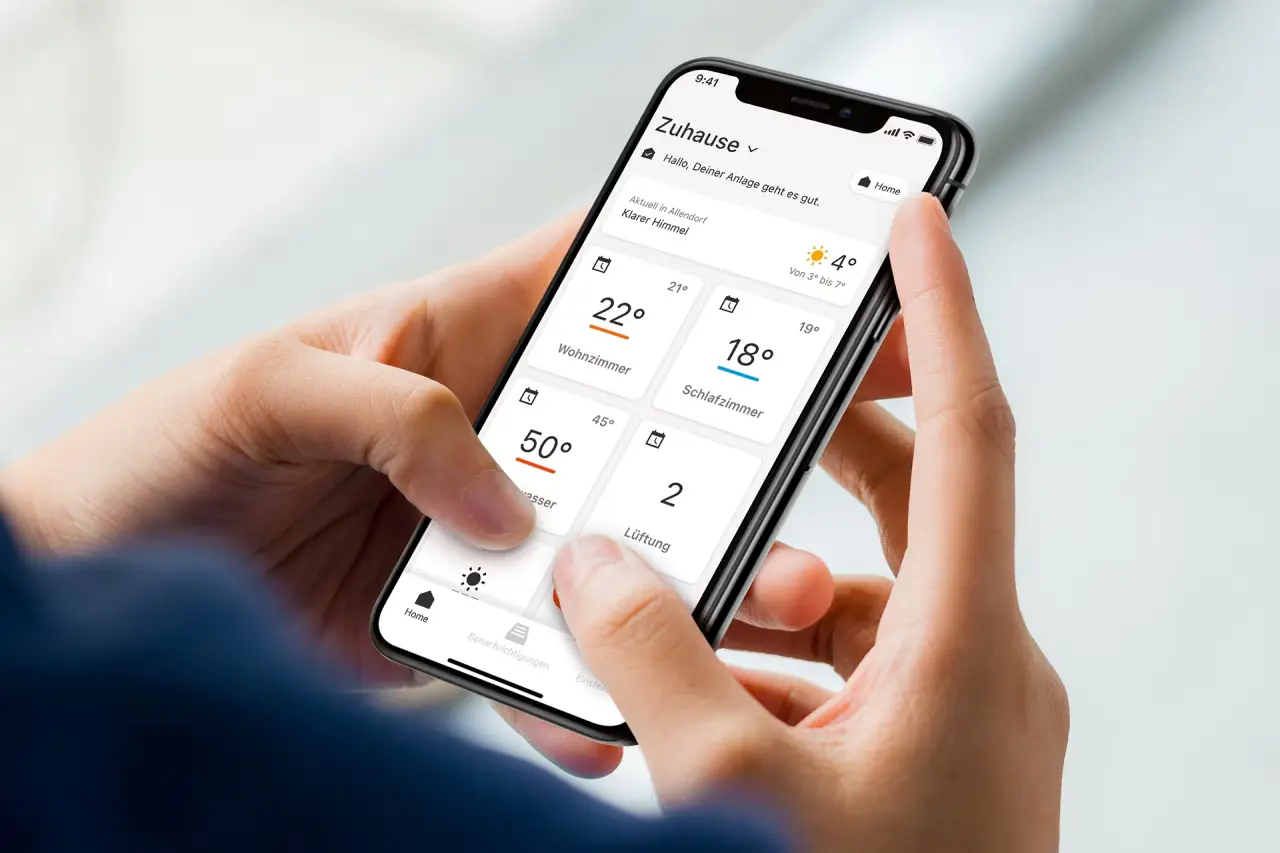
Viessmann intelligent heating systems are not only highly efficient and durable. They are also designed for use in a smart home. WiFi is already integrated into all modern heating solutions. All you need to do is install the ViCare app to control your heating system. If your heating system doesn't yet have a built-in internet interface, you can simply add one later using Vitoconnect. This even allows you to connect older heating systems to the internet in just a few steps, transforming them into a digital heating system.
Intelligent energy management in a smart home creates optimal conditions for energy savings. Thomas Heim, Viessmann's Director of Sales and Marketing (now CEO), explains the benefits.
Thomas Heim, Director of Sales and Marketing at Viessmann (now CEO), on the topic "Energy Management".
Using a smartphone or tablet, system owners can intuitively control their heating system and adjust the heating output to suit their needs. Numerous modes, such as an assistance function with different daily switch-on times or an "on-the-go" mode, help reduce energy costs over the long term. Energy can also be saved with a smart lighting system. For example, this ensures that lights are only turned on when someone is home. When no one is home, the lights are automatically turned off.
The Viessmann ViCare app offers new options for managing your heating system. Take advantage of greater efficiency, convenience, and security.
In addition to cost savings, a smart home also improves ease of use. This means fewer manual movements are required for control. For example, residents no longer need to adjust the thermostat to set the desired temperature. A single command on their smartphone is enough to extend the heating cycle.
For those who spend time on the road but value the comfort of heating when they return home, remote control via smartphone, regardless of location or time, is the ideal solution. Furthermore, this heating technology can be combined with other smart home systems that support geofencing. The system uses GPS data from the connected smartphone to determine the location of residents. When they approach their smart home, the rooms automatically heat up to the desired temperature.
Smart home lighting and entertainment systems also help enhance convenience. For example, these systems allow you to control lighting as needed with just one command. Dimming the lights for watching a movie or brightening the lights for reading are all accomplished with voice commands. A music system or TV can also be set to play the desired track or program for any occasion. Commands only need to be configured once in advance to ensure a smooth experience.

(Image: © goodluz | Shutterstock.com)
In addition to cost savings and increased convenience, smart home systems like intelligent digital heating systems primarily improve operational reliability. In the case of heating systems, well-designed apps like ViCare constantly keep residents informed and promptly notify them of any necessary actions. For example, if maintenance is due, the app's background turns yellow. If it turns red, the installer's contact information is automatically displayed. This minimizes the risk of breakdowns during the heating season.
Other smart home systems also provide additional security. For example, doors and windows can be equipped with sensors. If any sudden, unusual movement occurs, an alarm is triggered. At the same time, owners receive a message on their smartphone so they can respond quickly. Surveillance cameras can also be integrated into a smart network. Users can activate them remotely and check that everything is in order. Smart lighting systems in the entrance area protect against tripping hazards and simultaneously deter potential burglars.
Detailed information about Viessmann application programs can be found on the Heating and Applications page .
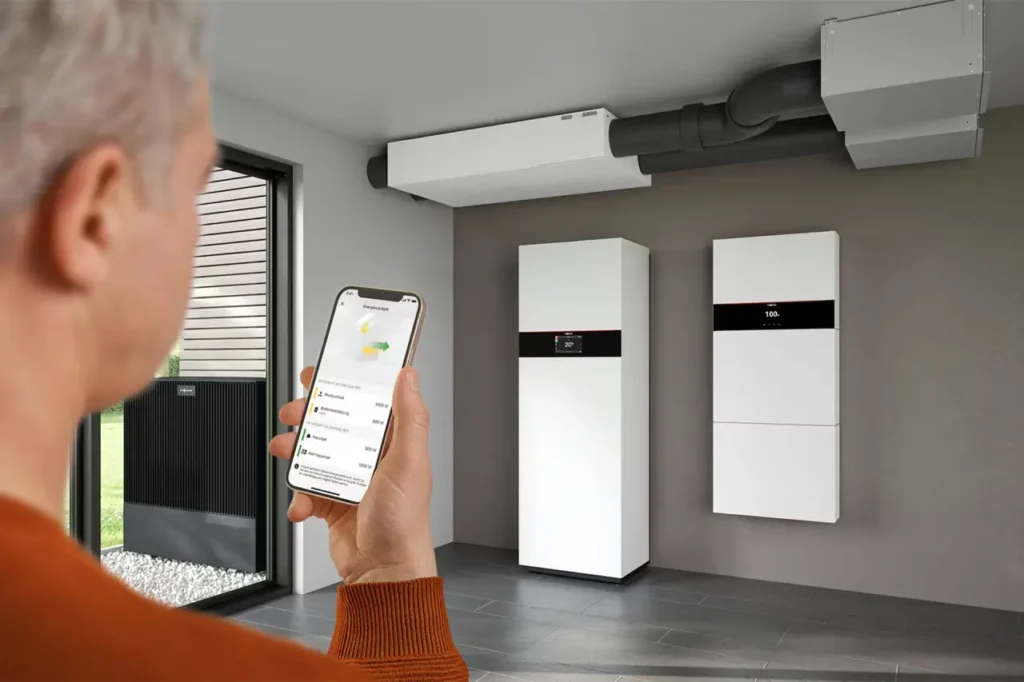
Using the new Vitocal heat pump as an example, you can see below how smart heating system technology can improve the efficiency of your home:
Make your home more comfortable, efficient, and future-proof with Viessmann One Base: The platform integrates existing smart home solutions into a single system.
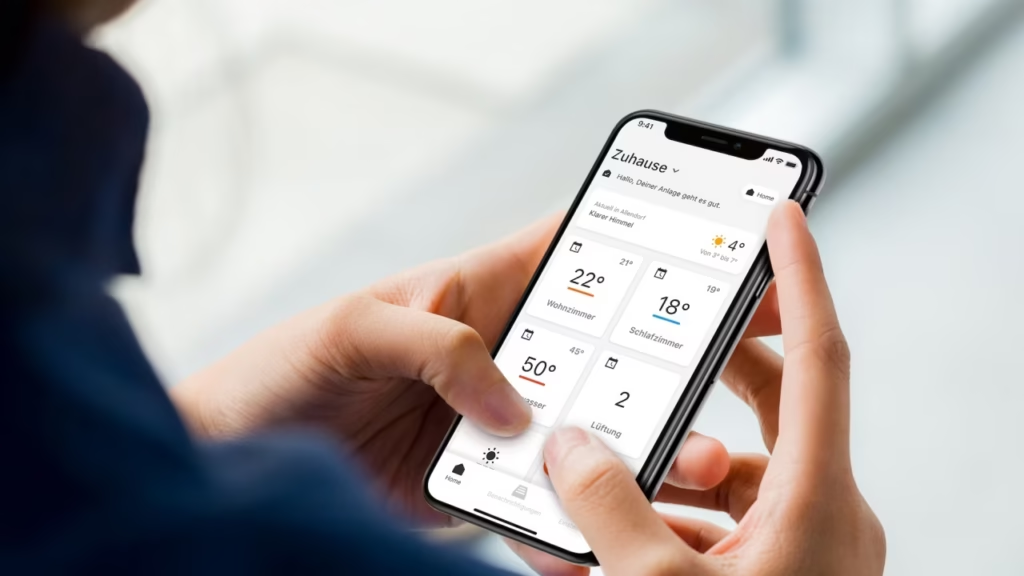
Whether end users or trade partners, Viessmann has the right apps for every target group. Learn more about their features and applications here.
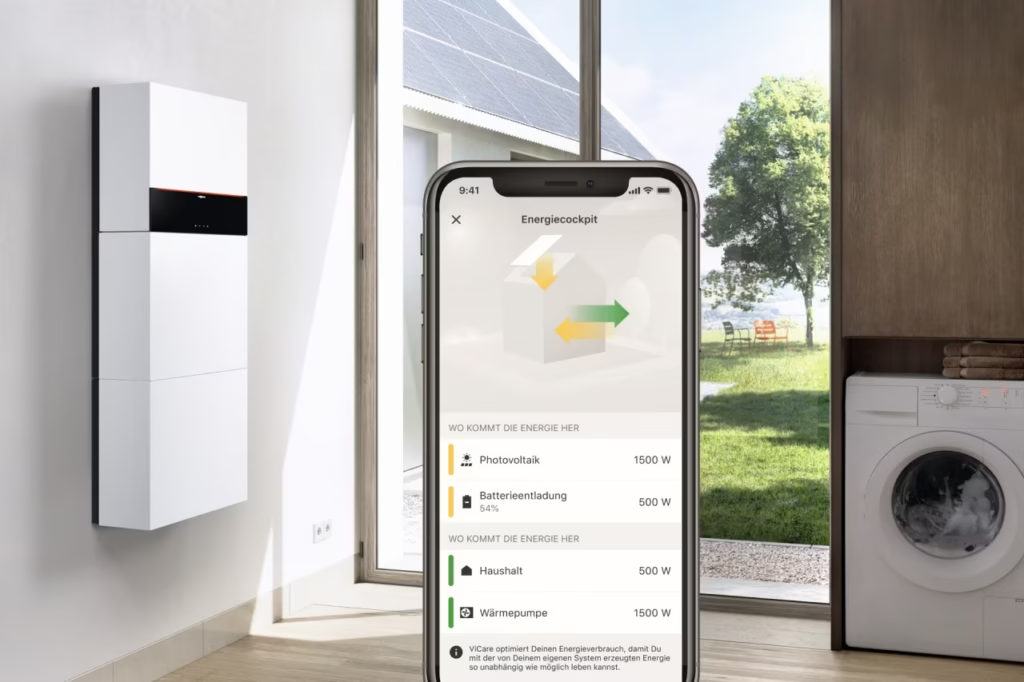
Energy Management displays and optimizes energy flows in your home in real time on your smartphone or tablet. Learn more about the features and compatible systems.